
The figures in this piece were taken on Sunday 30 August 2026 at 08:50 UTC. Stock and preferred moves run from Friday 21 to Friday 28, the full trading week. ETF flows cover Monday 24 to Friday 28.
Bitcoin this week
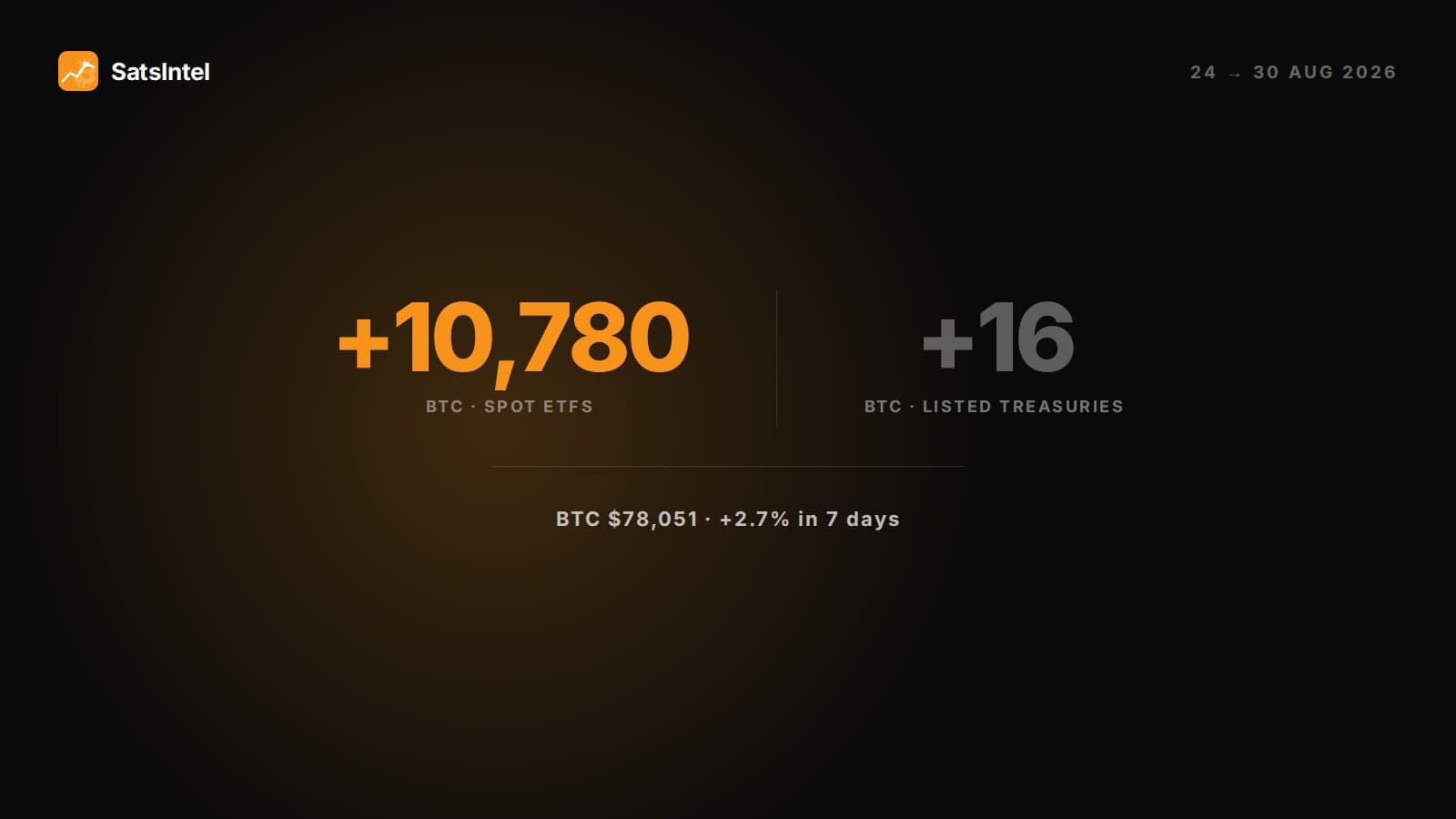
Bitcoin trades at 78,051 dollars, up 2.7% over seven days.
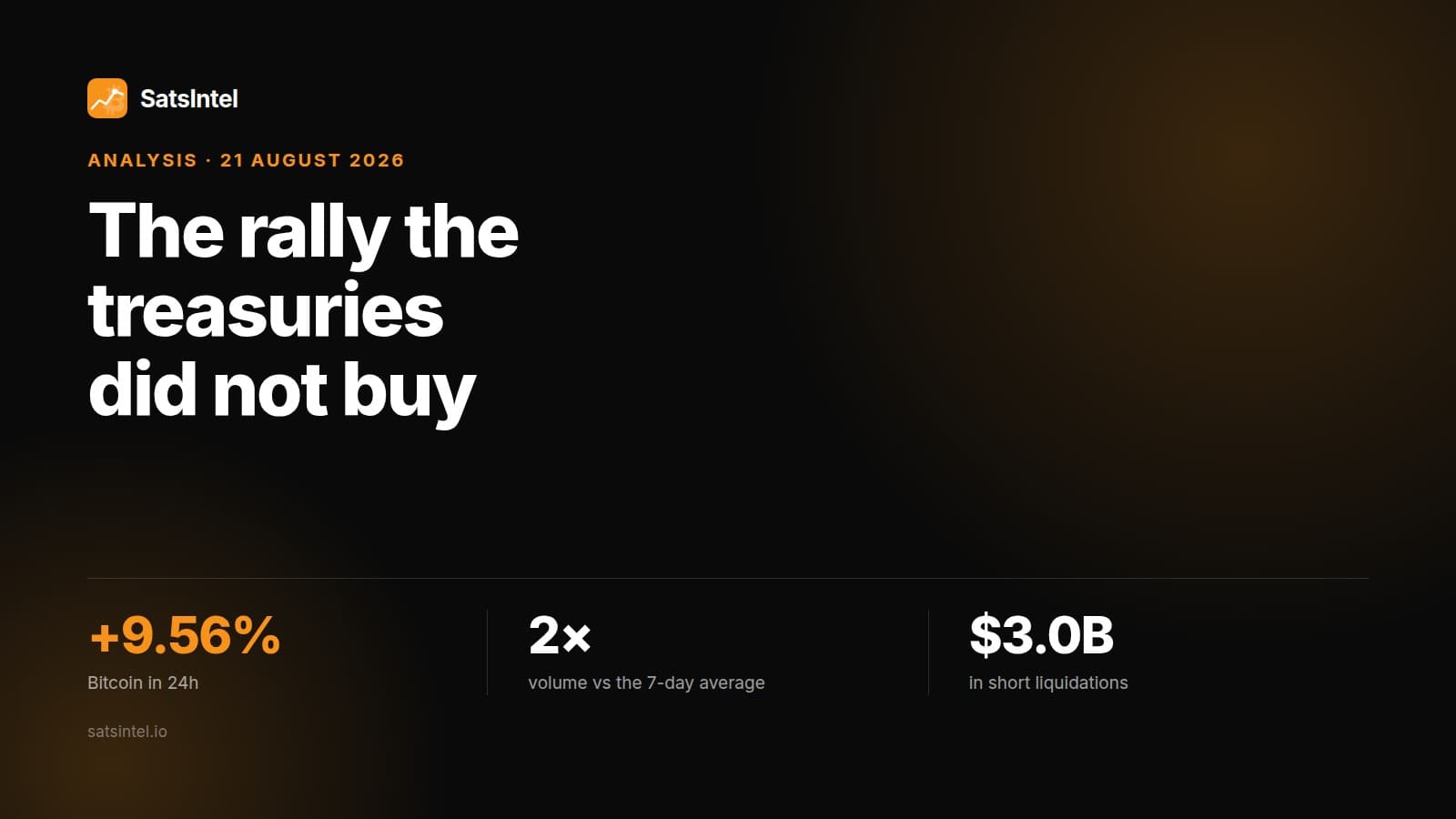
The big move belonged to the week before. Between 20 and 22 August the price went from 69,291 to 78,318 dollars, a little over 13% in two sessions. This week was about holding that level. The high came on Thursday 28 at 80,268 dollars and the price gave that back over the following two sessions. The low of 77,081 was set on Sunday 23.
Step back and the month is up 21.7%. The year is down 27.8%. And the price sits 38.1% below the all-time highATHAll-Time High: the highest price an asset has ever reached.View term → of 126,080 dollars set on 6 October 2025. All three numbers are true at once and they describe different things.
Market data
Bitcoin's market capitalisation is 1.567 trillion dollars, within a total crypto market of 2.63 trillion. Dominance stands at 59.48%.
Volume over the last 24 hours came in at 13,204 million dollars. That is a thin figure for a weekend following a narrow-range week, and it matches what the price is saying: anyone in a hurry to buy did so on 20 August.
Among Bitcoin-linked equities the week split in two. Strategy rose 6.76% to 127.31 dollars. Metaplanet rose 13.07% to 346 yen, the best of the group. On the other side, Twenty One Capital fell 7.40% and the miners took the worst of it: Marathon down 5.24%, Riot down 4.24% and CleanSpark down 2.67%. Bitcoin rose that week while the miners fell, a divergence worth writing down.
Investment flows
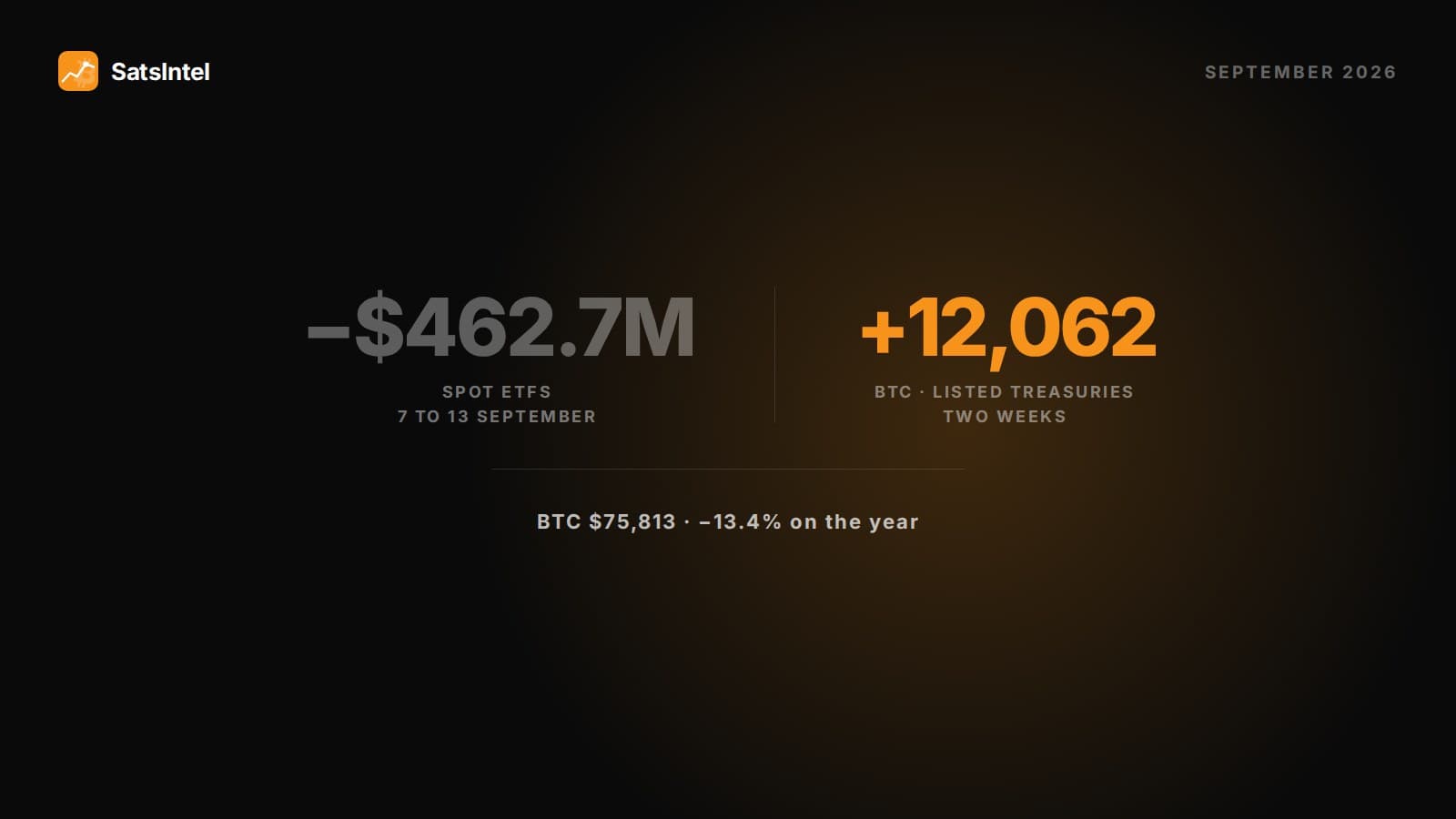
Spot ETFs took in 842.6 million dollars across the five sessions, worth 10,780 bitcoin at each day's price.
That is half of what came in the week before, which was 1,881.6 million and 24,073 bitcoin. The last four weeks read: 858.5 million early in the month, 461.2 million of outflows in the week of 10 to 16 August, 1,881.6 million of inflows from 17 to 23, and these 842.6 million now. An average means very little across a range like that.
Within the week, four sessions of inflows and one of outflows. Monday 24 brought in 321.2 million, Tuesday 307.3, Wednesday 185.4 and Thursday 230.6. On Friday 28, 201.9 million left, on the very day of the price high.
What the treasury companies bought
Listed companies holding Bitcoin on their balance sheet added 16 bitcoin over the whole week.
That is not a typo. The aggregate moved from 1,282,501 to 1,282,517 bitcoin across 179 companies. The two prior weeks were negative, with 1,690 and 1,638 bitcoin going out. Over a month, corporate treasuries as a group have sold more than they have bought.
Strategy holds 840,447 bitcoin, 4.00% of all the supply that will ever exist. Its mNAV sits at 1.03 times on enterprise value, the convention the company itself publishes. That number explains a good deal of the above. The treasury model works by issuing paper above the value of its bitcoin and using the cash to buy more, so that every old share ends up backed by more bitcoin than before. With the premium at 3%, the machinery stops on its own.
The ETFs, fund by fund
The weekly breakdown carries a reading that the total hides. Of the 842.6 million that came in, IBIT took 938.3.
The rest of the complex sold. ARKB lost 85.2 million, GBTC 77.6, BITB 16.0 and HODLHODLThe strategy of holding Bitcoin long term without selling, regardless of price.View term → 4.2. Only FBTC, with 62.0 million, and the Morgan Stanley fund, with 25.3, joined BlackRock on the positive side. Put another way: one product contributed more money than came in altogether, and the others subtracted.
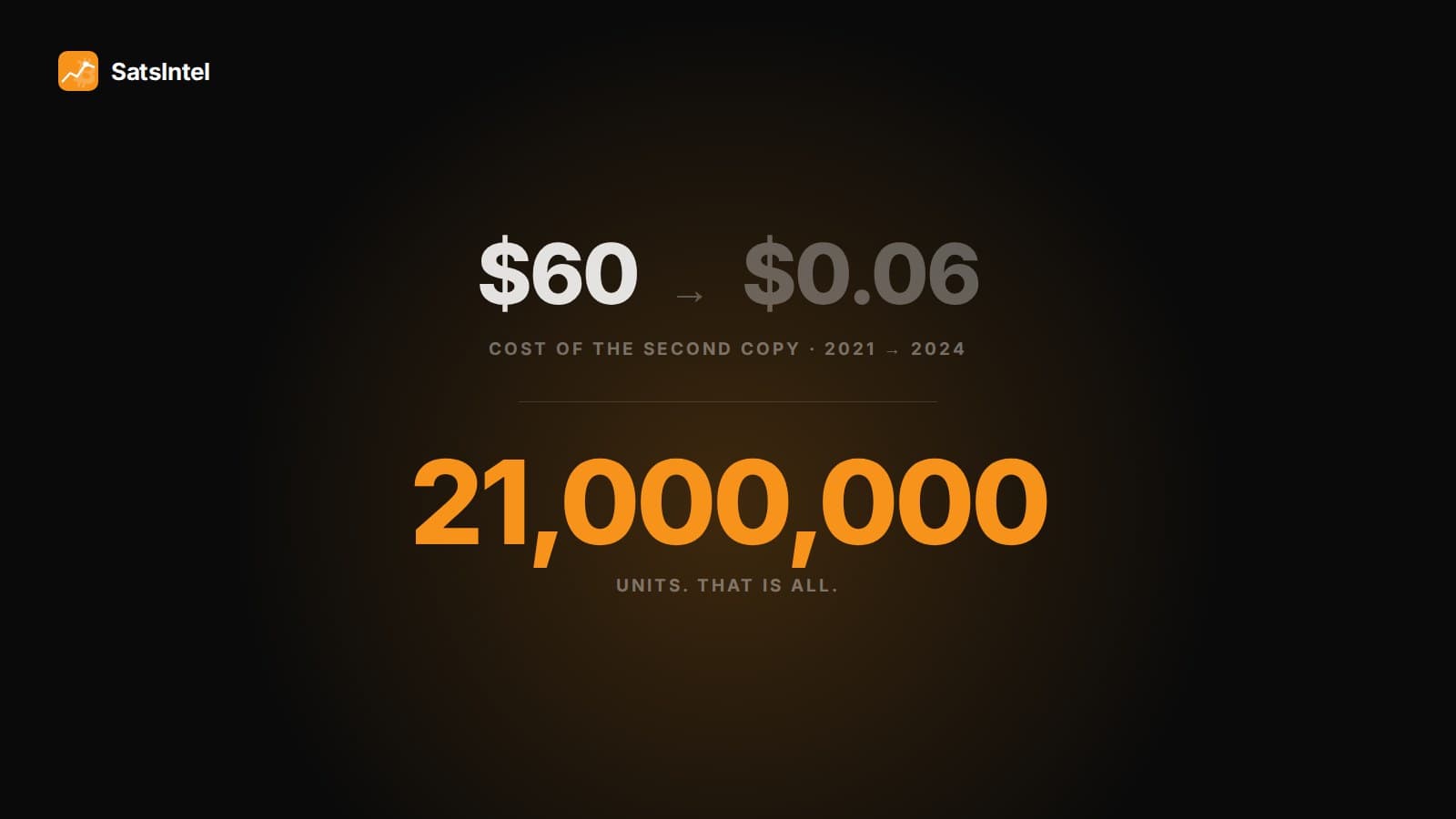
The twelve spot ETFs now hold 1,283,270 bitcoin, 6.11% of maximum supply, with 79,147 million dollars under management. Corporate treasuries stand at 1,276,457 bitcoin and 6.08%. The two vehicles are all but level, and this week the gap widened in the funds' favour. Between them they control 2,559,727 bitcoin, 12.19% of the 21 million.
The preferreds
The Bitcoin fixed income panel covers seven instruments from three issuers, at an average yield of 9.7%. The week sorted them by price.
The two trading near par rose. STRF, paying 10% quarterly, gained 2.09% to 101.65 dollars. STRC, paying 12% across two payments a month, gained 1.20% to 97.33. The two trading at a deep discount fell: STRD down 0.62% to 72.05 dollars and STRK down 0.73% to 71.73. SATA, the Strive issue paying 13% accrued daily, slipped 0.26% to 99.75, hugging its 100 par.
STRE still has no retail-accessible quote. And Metaplanet has announced its Mercury preferred at 4.9%, still ahead of issuance.
The pattern is legible. The preferreds that behave like a bond, with the price anchored to par, held up. The ones trading at 72 dollars against a par of 100 moved with the common stock, which is what they do once the market starts thinking about the issuer's ability to pay before it thinks about the coupon.
Reading the week
Three things have to be held at once.
Bitcoin kept the 20 August move without giving it back, which after a 13% jump in two days counts as news on its own. The money that came in arrived almost entirely through one channel, BlackRock's, while the rest of the ETF industry saw redemptions. And the companies that have been the loudest part of the demand for two years have gone quiet, with a balance of 16 bitcoin across five sessions and a month in the red.
The question for the coming weeks is whether the funds keep covering the gap the treasury companies leave. This week they covered it easily. It is worth looking at where that money came from before calling it structural, because a single issuer doing all the work is thinner demand than the total suggests.
None of this predicts next week's price. These are the figures as they stand, with their date and their source, and each reader will draw their own conclusion.
Sources: CoinGecko for price, market cap and dominance; Farside Investors for ETF flows; Yahoo Finance for stock and preferred quotes; and SatsIntel's own corporate treasury aggregate, with a weekly snapshot. SatsIntel is an information provider, is not authorised to offer crypto-asset services, and gives no financial, tax or legal advice. Crypto-assets are high-risk, highly volatile assets: you can lose all the capital you invest.