

On June 1, Michael Saylor announced something that had not happened since December 2022: the company sold Bitcoin. It was 32 BTC, about $2.5 million, sold between May 26 and 31 to fund the dividend payment on STRC, one of its preferred share series. The only earlier sale was 704 BTC on December 22, 2022, executed for tax reasons — to book a capital loss — and offset two days later by the purchase of 810 BTC. This time the reason is operational, and that is the difference.
The figure is irrelevant for a company that holds more than 845,000 BTC: it represents 0.004% of its reserve. But the market did not read the number — it read the symbol. Bitcoin fell 2% in the minutes after the announcement and dropped below $60,000 for the first time since the 2024 US elections, accumulating a roughly 15% decline on the week. The detail that underlines how symbolic this was: that same week, Strategy sold about 800,000 of its own shares for $128 million under its at-the-market programme — fifty times more capital than the Bitcoin sale that set the headlines on fire.
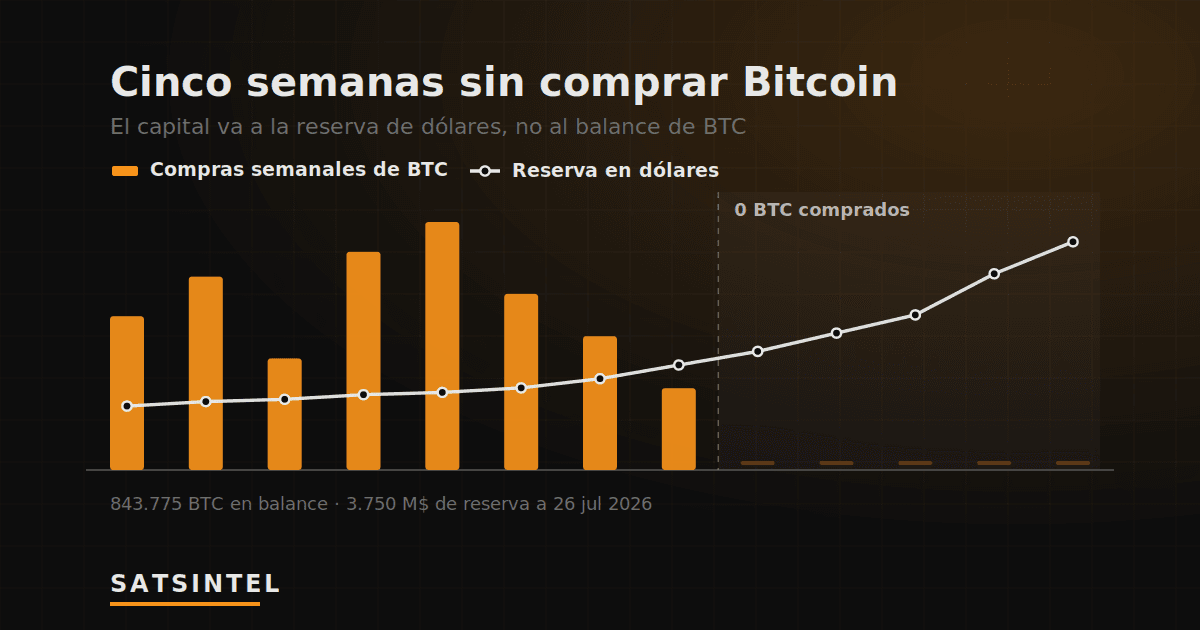
The answer came on Monday, June 8: Strategy reported the purchase of 1,550 BTC for approximately $101 million, at an average price of about $65,161, raising its total reserve to 845,256 BTC — around 4% of all the bitcoin that will ever exist.
Why sell such a small amount, and why announce it? The thesis circulating among institutional analysts points to the S&P 500. As of September 2025, Strategy met every formal requirement for index inclusion: US listing, market cap well above the minimum, volume, free float and positive earnings. It was left out. The most cited explanation: a company that only accumulates Bitcoin and never sells can be classified as an investment fund rather than an operating company — and investment funds are excluded from the index. Selling something, however token, breaks that argument. S&P 500 inclusion would bring automatic flows from index funds and, probably, a credit-rating upgrade that would cheapen its financing.
Saylor had already telegraphed the shift when presenting first-quarter results on May 5, hinting the company might sell a small part of its Bitcoin. The question the market still has not answered is whether the 32 BTC sale was a one-off gesture or the start of a recurring mechanism to fund its preferred dividends — the difference between an anecdote and a change of policy.
What the underlying numbers say: Strategy carries an official BTC Yield of 9.4% in 2026 and has bought more than 172,000 BTC year to date, close to three times all the bitcoin mined in the same period. The signal to watch is in the weekly 8-K filings: if the token sales repeat, the S&P 500 thesis gains weight.