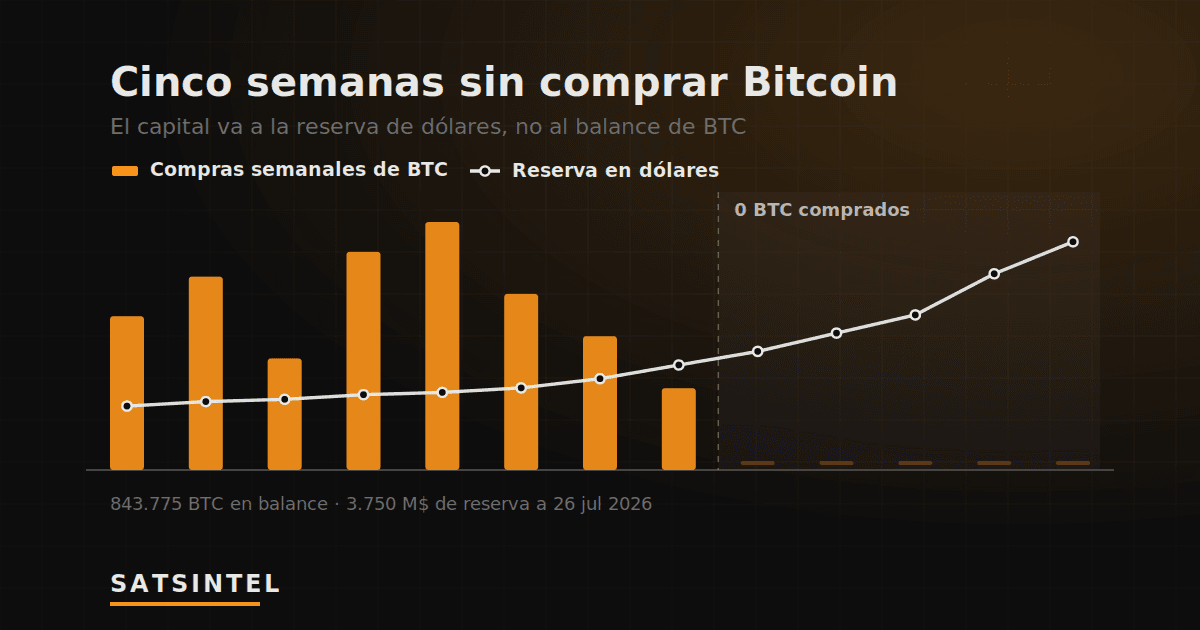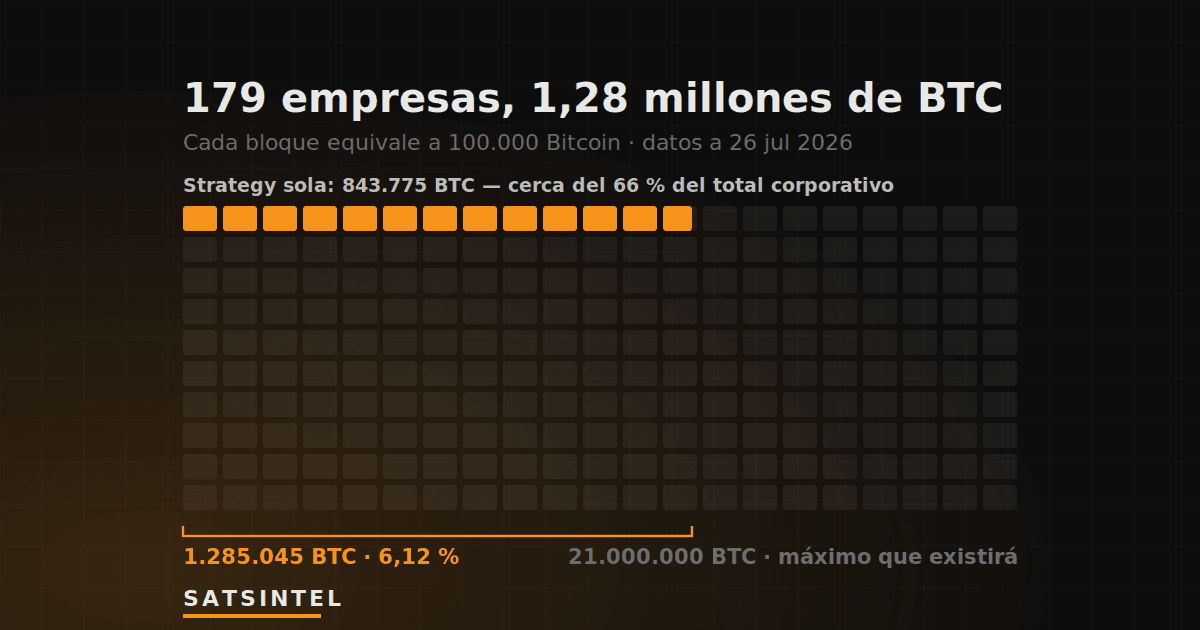


Strategy (formerly MicroStrategy) has rattled the market with its largest purchase since 2024: 34,164 BTC acquired on April 20 for about $2.54 billion, at an average price of $74,395 per bitcoin. After the operation, the corporate balance stands at 815,061 BTC, equal to 3.9% of global circulating supply.
The purchase was financed by issuing $2.18 billion of STRF, the perpetual preferredPerpetual PreferredFixed-income instrument with no maturity that pays a fixed dividend, ranking ahead of common shareholders.View term → with a 10% dividend, complemented by $366 million raised through the ATM programme on MSTR shares. The company keeps available capacity across its three active capital programmes (STRF, STRC and the MSTR ATM) to keep expanding the balance without new issuance authorisations.
The first-quarter pace is the key data point. If Strategy keeps the monthly cadence of purchases seen in Q1, it reaches one million BTC in December 2026. Michael Saylor revived his famous "orange-dot chart" this week, suggesting the million target is no longer a slogan: it is an open arithmetic calculation.
Is it sustainable? The question divides investors. Defenders argue that as long as MSTR trades at a premium to NAVNAVNet Asset Value: the net value of the assets of a fund, ETF or treasury company. In Bitcoin terms, the BTC on the balance sheet multiplied by its market price.View term → (the famous mNAV) and there is institutional demand for STRF at 10%, the cycle self-reinforces: each issuance adds BTC, each BTC raises NAV, NAV sustains the premium, the premium enables new issuance. Critics note the model depends crucially on Bitcoin's price and on market confidence: a sharp drop could compress the premium and close the financing window.
To assess exposure to Strategy rigorously, the quantitative data matters more than the narratives. SatsIntel's mNAV calculator and stress test let you visualise the historical premium and the price thresholds the company could withstand in different scenarios. The MSTR profile in the directory carries the figures updated to April 20.