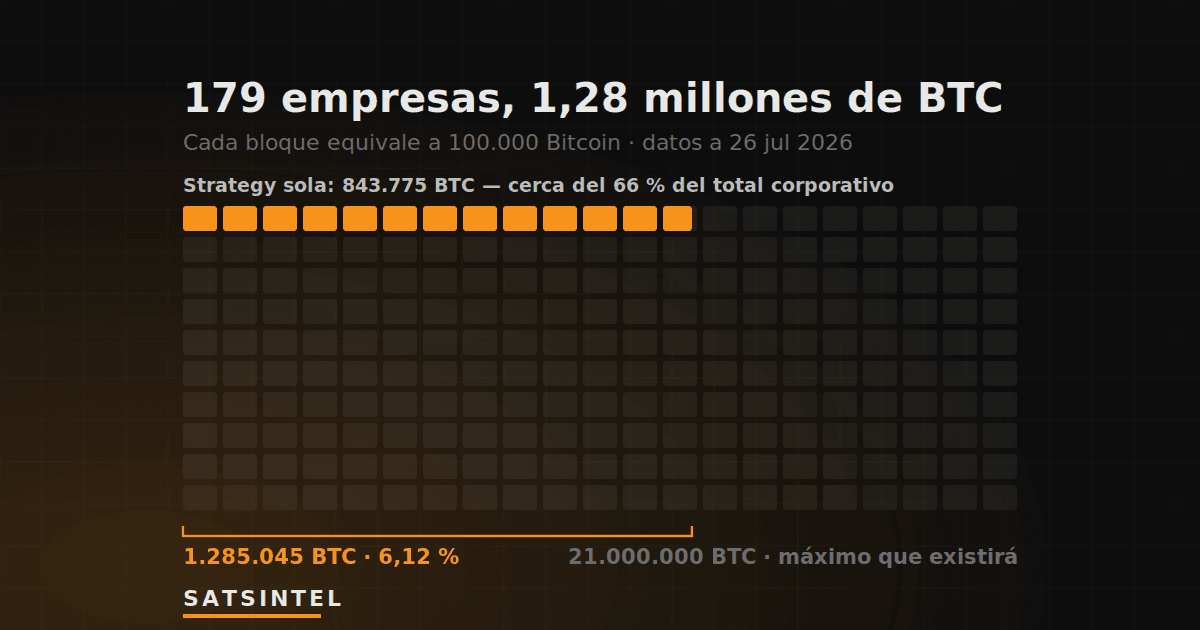

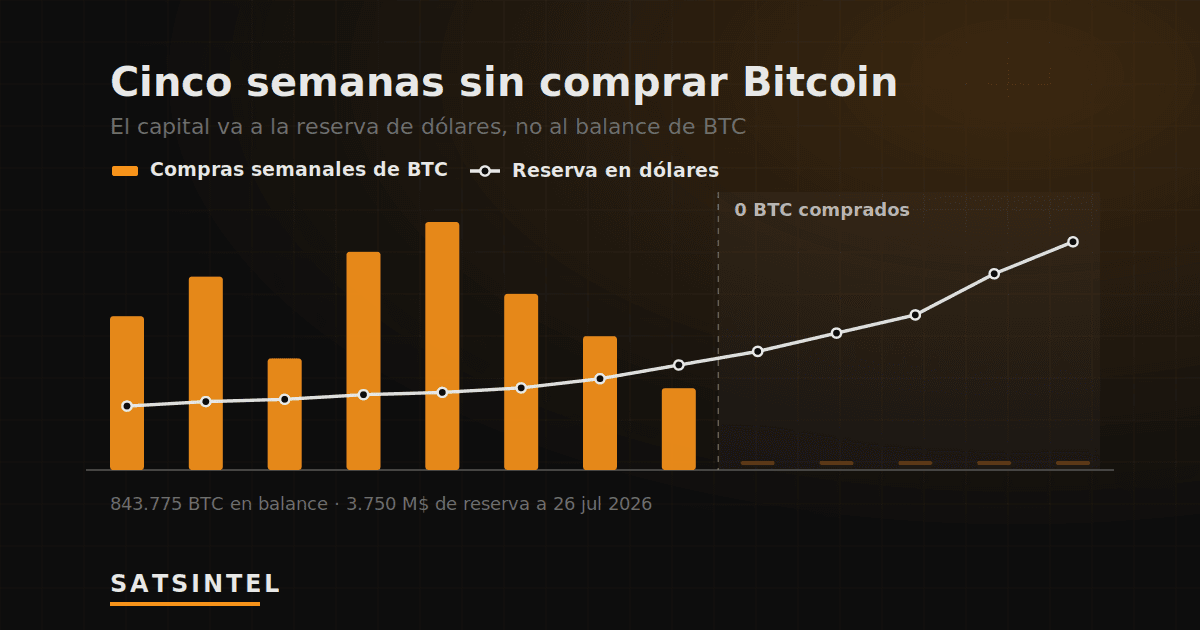
Strategy has not bought a single Bitcoin in five weeks. The 8-K filed with the SEC on July 27 says it in the barest possible terms: no bitcoin purchases were made this week. It is the fifth consecutive weekly filing carrying the same message, and the longest stretch without acquisitions since the company turned accumulation into its business model.
The position stays at 843,775 BTC, with an aggregate cost basis of $63.69 billion and an average purchase price of $75,476 per Bitcoin. With BTC around $64,400, Strategy's directory profile shows a position roughly 15% below cost: some $9.33 billion of unrealised loss.
The money went to the dollar reserve, not to Bitcoin
The striking part is not that Strategy stopped buying. It is that it kept raising capital. In the same week it issued 5,429,160 class A shares through its ATM programme, for net proceeds of $544.5 million. That money did not go into Bitcoin. It went into the reserve.
The USD Reserve — the dollar buffer the company formalised on June 29 with its Digital Credit Capital Framework — reached $3.75 billion as of July 26, up from the $2.55 billion left after the sale earlier in the month. The framework sets an explicit floor: the reserve must cover at least twelve months of preferred dividends and debt interest. Against an annual bill of roughly $1.76 billion, current coverage is about 17.4 months.
July's sale was the largest in its history
On July 6 Strategy sold 3,588 BTC for around $216 million, at an average price near $60,168. It was the largest Bitcoin sale in its history, and it came five weeks after the 32 BTC sold on June 1 — which was itself the first since December 2022. Both trades had the same destination: feeding the reserve that pays the dividends on its preferred shares.
That is the order of priority the company has now made explicit: first the ATM on the common stock, then the $1.25 billion BTC Monetization Program, and the Bitcoin on the balance sheet as the last line of defence. We work through it in can a Bitcoin treasury company be forced to sell?.
STRC at 12% and the mNAV problem
Since July 1, STRC pays 12.00% a year, an increase Strategy activated to pull the security back into its $99-$100 target range. The dividend is reviewed monthly with that goal in mind. It is the price lever; the cost is a larger dividend bill.
And that is the knot. With the company's mNAV below 1 since June, issuing common shares to buy Bitcoin destroys value per share instead of creating it: the arithmetic that powered the flywheel for five years stops working once the market pays less than a dollar for each dollar of Bitcoin on the balance sheet. You can see how each treasury would hold up at different BTC prices in the stress test.
What to watch
Second-quarter results land this week and are the next hard data point: they will show what the quarter actually cost in dividends, how much capital came in through the ATM and whether the reserve is still growing. The operational question is simple: if mNAVmNAVMultiple on Net Asset Value: how a treasury company trades relative to its BTC.View term → does not climb back above 1 and Bitcoin does not recover ground, where does fourth-quarter capital come from?
Data from Strategy's 8-K of July 27, 2026 and its press release of June 29, 2026. Bitcoin price as of July 26, 2026. This is information, not financial advice.